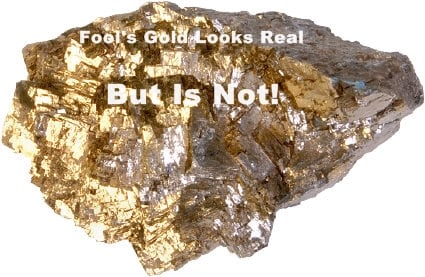
How To Separate Fools Gold From Real Gold : Pyrite Fool S Gold. Pick out the flecks of gold with tweezers and attempt to break them. As the light material moves away tap your pan lightly on the top edge. You should be able to remove about 90% of the fine gold in a few minutes. Apr 12, 2017 · fool's gold, the mineral pyrite, has a metallic luster and gray or black streaks, and feels heavy for its size, although real gold is denser. The term was often used during the california gold rush in the 1840s because inexperienced prospectors would claim discoveries of gold, but in reality it would be pyrite, composed of worthless iron disulfide (fes₂).
Although the exercise and outdoor activity experienced in prospecting are rewarding, there are few thrills comparable to finding gold.even an assay report showing an appreciable content of gold in a sample obtained from a lode deposit. Gold nuggets, a popular form of gold with collectors, are formed when erosion causes a large piece of gold to separate from its mother rock, and then gets carried into a stream or river. As the light material moves away tap your pan lightly on the top edge. Panning can be rewarding, if done correctly. Filter the ore and bleach solution to remove all the impurities, such as soil and rock fragments.
How To Test A Rock For Gold from photos.demandstudios.com The mineral pyrite was historically nicknamed fool's gold because of its deceptive resemblance to the precious metal. The many rewards of finding gold. Consider the source and location. Fool's gold is made up of crystals and has sharp edges, while real gold is a metal with a smoother texture and rounder edges. Use a circular motion to swirl the water around in your gold pan. You will find that the gold will mostly stay put, while other light weight material moves away. The flowing water tumbles the gold, giving it its distinct. Fool's gold, the mineral pyrite, has a metallic luster and gray or black streaks, and feels heavy for its size, although real gold is denser.
How to separate specks of fool's gold from specks of real gold ….
Look for some sort of mark as to its karat value in terms of purity. Pick out the flecks of gold with tweezers and attempt to break them. This will separate the heavy gold even further from the waste. Experiment 5 help chemistry land getting gold from the sand along a river is done by gold panning. Gold nuggets, a popular form of gold with collectors, are formed when erosion causes a large piece of gold to separate from its mother rock, and then gets carried into a stream or river. An international team of scientists have found that the mineral pyrite, often called fool's gold because of being similar to gold but not as worthy, actually contains real gold in more ways than previously expected. If you think it is gold, place your hand between it and the sun to create shade over the gold. The mineral pyrite was historically nicknamed fool's gold because of its deceptive resemblance to the precious metal. The method destroys the gold threads. Other lighter particles of quartz will rise to the top. Fool's gold is made up of crystals and has sharp edges, while real gold is a metal with a smoother texture and rounder edges. The mineral pyrite was historically nicknamed fool's gold because of its deceptive resemblance to the precious metal. If it still appears bright in the pan, chances are that it is real gold.
Stop shaking the pan and begin using a gentle. Panning can be rewarding, if done correctly. Experiment 5 help chemistry land getting gold from the sand along a river is done by gold panning. Allow four hours for the gold to dissolve, stirring every 20 minutes. To extract the gold, the ore is crushed, then the gold is separated from the ore by various methods.
Gold Test Is It Real Goldbay from goldbay.com Take a number from the prospectors of yore and spend an afternoon by a stream, pan in hand. Fool's gold is made up of crystals and has sharp edges, while real gold is a metal with a smoother texture and rounder edges. Experiment 5 help chemistry land getting gold from the sand along a river is done by gold panning. Stop shaking the pan and begin using a gentle. Fool's gold is brittle and cracks, breaks or shatters easily. But fougerouse and his team investigated ways to extract. Swirl the powdery water around in your pan until the gold separates. As the light material moves away tap your pan lightly on the top edge.
The term was often used during the california gold rush in the 1840s because inexperienced prospectors would claim discoveries of gold, but in reality it would be pyrite, composed of worthless iron disulfide (fes₂).
Catch gold fever by panning for your own gold. Use a circular motion to swirl the water around in your gold pan. See more ideas about rock collection, rock hounding, rock collection display. Apr 12, 2017 · fool's gold, the mineral pyrite, has a metallic luster and gray or black streaks, and feels heavy for its size, although real gold is denser. Here are some easy tips on how you can separate fools gold from real gold. The many rewards of finding gold. If you think it is gold, place your hand between it and the sun to create shade over the gold. Using an 'atom probe', research has uncovered a new way gold atoms can hide in. This is a quick way to see if there is gold present. The chlorine reacts with the gold inside the ore to form gold chloride. An international team of scientists have found that the mineral pyrite, often called fool's gold because of being similar to gold but not as worthy, actually contains real gold in more ways than previously expected. You will find that the gold will mostly stay put, while other light weight material moves away. Panning for gold and knowing how to separate it from fool's gold takes practice and an ability to work quickly with a prospector's pan.
Filter the ore and bleach solution to remove all the impurities, such as soil and rock fragments. Allow four hours for the gold to dissolve, stirring every 20 minutes. Follow these steps to learn how to pan for that glittering ore. Anyone who pans for gold hopes to be rewarded by the glitter of colors in the fine material collected in the bottom of the pan. Fool's gold is brittle and cracks, breaks or shatters easily.
Recognizing Real Gold And Fool S Gold Little Sepia Books from lsbpublishing.com Fool's gold is made up of crystals and has sharp edges, while real gold is a metal with a smoother texture and rounder edges. If it is marked with a number after the letter 'k' (e.g. You should be able to remove about 90% of the fine gold in a few minutes. To extract the gold, the ore is crushed, then the gold is separated from the ore by various methods. The researchers claim that the discovery can help gold miners to extract gold from pyrite in more efficient and environment. Stop shaking the pan and begin using a gentle. Fool's gold, the mineral pyrite, has a metallic luster and gray or black streaks, and feels heavy for its size, although real gold is denser. This is a quick way to see if there is gold present.
The mineral pyrite was historically nicknamed fool's gold because of its deceptive resemblance to the precious metal.
Repeat the shaking of the pan and the back and forth motions that wash away sediment until nothing is left in the pan except gold nuggets and flakes. The mineral pyrite was historically nicknamed fool's gold because of its deceptive resemblance to the precious metal. Gold nuggets, a popular form of gold with collectors, are formed when erosion causes a large piece of gold to separate from its mother rock, and then gets carried into a stream or river. The mineral pyrite was historically nicknamed fool's gold because of its deceptive resemblance to the precious metal. The researchers claim that the discovery can help gold miners to extract gold from pyrite in more efficient and environment. The task is to separate out the gold from the mixture of sand, soil, salts, and gold flakes. The chlorine reacts with the gold inside the ore to form gold chloride. Fool's gold is brittle and cracks, breaks or shatters easily. Other lighter particles of quartz will rise to the top. Take a number from the prospectors of yore and spend an afternoon by a stream, pan in hand. Fool's gold is found inside rocks beneath the earth's surface, sometimes near real gold deposits. If you look closely at the piece and see that its structure consists of what looks like small and sharp cubes, then it is fool's gold. The many rewards of finding gold.